Monday, 31 January 2011

Jomini and 40k

You know how people talk about refused flank and stuff like that. "Oh yeah the guy castled up in a corner and I couldn't weed him out with my Vypers" or "Yeah well I like to concentrate on a thrust for objectives in the last turn while scattering my army until then". Jomini is where it is from for me...go Google it.

OK so here are his 12 'orders of battle', formations or deployments in 40k, and how you might see them across the table plus the bonus info of how to oppose them. This really helps you with Friction, ironic since C-man and J-dude were pretty unfriendly when they hung out together.


1. Parallel Order. To Jomini this is the worst order. It introduces no sophisticated tactics it just smashes line on line until someone wins. Trouble is the reason that is bad is that forces were relatively evenly matched, in terms of tech, training etc, at the time so realistically since this isn't the case in 40k we can write that off somewhat.

You see this one most from armies with high resilience, low mobility and high destructive capability in close. Deathwing Terminators and Necron Phalanx spring to mind as well as foot Wolves, Wolf Wing, ThunderWolves or shooty Wolves. This is mostly used by people who believe the "its the list stupid!" theory of 40k, or worse "its the codex creep stupid!". The point is they have no decisive plan other than to close and bring force to bare evenly relying on inbuilt advantages to see them through.

You combat it by first deciding if you win the brawl and second using one of the more sophisticated plans if you are less than sure you do.


2. Parallel Order with Defensive or Offensive crotchet. You reduce the length of your line and form either an offensive or defensive base on one side, dictated by terrain usually. Normally this is a defensive position because you don't have a lot of paths to exploit weakness when your superior force element is in a corner.

You see this all the time. People pick a side and put down the stuff they wanna use in an attack there. It's intuitive. What isn't necessarily intuitive is why this is usually a defensive order. Lines of exploit are golden and when your strong point is the center you can exploit in all directions, which is why it's the best place to start in games like connect four and 40k when all other things are equal. You can see these lines as fire lanes or movement paths.

This one combats the first by basically forcing them to change formation to deal with you. A classic play with a maneuverable army is to deploy as order 1 then move fast vehicles to the side to resemble fig 2 before thrusting on the flank before your opponent can move to counter.


3 and 4. Parallel Order with Reinforcement on Flank (3) or Center (4). This one is quite subtle. Rather than use stronger units to concentrate your force you use waves of unit. It works well for forces that have high impact but low survivability like Stealer lists or Tau. It is my preferred order of battle to use one of these two. Against a force where I expect multiple exploits to become available I use 3, because I can diverge from the stronger center, and against forces who have monolithic units I use 4, and feed the unit my army.
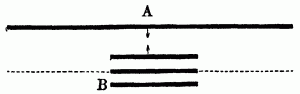


You see this one less frequently. People seem to not like placing units behind each other during deployment, which I find odd. Mid battle however this one becomes popular as people consolidate force elements into a defense of objectives x and y or an attack on objective z. The beauty of this one is given sufficient mobility you can adapt to more or less any other order inside a movement phase.

You counter this by attacking the weak line while avoiding the strong reinforcement, its quite instinctive.


5. The Oblique Order. What people in 40k call flanking. The aim is to move at an angle to the opposing line and expose uneven mobility in order to concentrate superior force. The subtle fact here is that most armies don't have uneven mobility - they are either all mounted in rhinos, yawn, or move at a similar pace on foot etc to the rest of the army. You therefore must create it by shooting them out of their transports or anchoring your weak center with terrain in most cases.

This works with more or less any force with an element that concentrates well. So blast template shooting, any assault force or close range shooting like Sisters. The key here is that your units are synergistic on the front end of the line so that fighting is decisive.

You counter this by either withdrawing into a reverse of their order, out lasting their attack at the decisive point or preempting their attack with one of your own so the opposition is in a more favorable position for the remainder of your force to come into play.


6 and 7. Perpendicular order on one (6) or both (7) wings. So this is what your doing when you outflank, deep strike or play Daemons. The idea behind 6 is to roll the enemy up, rather like cavalry used to do in classical battles where as 7 is designed to divide the enemy so that you can react to mistakes. As a purely offensive position this order always gives you first strike potential which can be significant in 40k.


Guard with the Taliban dude do this superbly. Tau can get it done well as well as can Blood Angel jump pack lists. Obviously all Daemon armies do it instinctively and forces based around Crushers, Defilers and Prince are generally attempting 6, or should be, where as forces based on troops, esp Slaanesh based forces, should go for 7 instead.

The counter is very difficult. You generally hope they roll poorly for reserves or deep strike scatter and you try to take them out piecemeal. If that doesn't work you need to make a concerted attack on the weaker side, if they're doing 7, or provide a sacrificial element to the attack if they use 6 and then try to separate the force.


8. Concave in the Center. What people in 40k call double flanking. This is actually best used as a transitional plan. That means you start off defensively then at some decisive point you switch to offense and surround the other guy or move for objectives.

Best performed by shooty infantry based lists you want to present a slightly weaker center which is further back. You want the enemy to form into order 4 and attack your center at which point you have him because his strength is committed while yours is not. The danger here is that your units will be unable to reinforce one another from left to right because of the central battle or that the central battle will be over too quickly. Both of these mean that assault armies can't really use this one. Static Guard, Foot Eldar, Shooty Marines and Tau use this well.

You counter this one by being too strong on the attack essentially. Or outlasting the defensive phase so that the other guy blinks first and moves.


9. Retired Center. Is basically the same as 8 except there is a more dramatic difference in distance between the center and the wings. The idea here is that your sacrificing the center to trap the opponent against your own board edge and isolate his force there. It is best when there is terrain in the center - Agincourt style.


10. Winged Echelon. This is the perpendicular order (7) for armies without access to Outflank, Deep Strike etc. Orks with Scout moving choppers are the classic because they don't want to reserve stuff but the do want to try to divide the force before the battle wagons get there. Counter in much the same way - with difficulty or preemptive attacks.


11. The Lance Formation (Central Echelon). You basically have order 3 but with an even faster center to compensate for the lack of direct reinforcement by line. Three Landraider Inquisition forces, Orks with Bikers instead of Choppers and the like use this regularly. Your faster force hits the middle and divides the opposition with a breakthrough. Your stronger but slower stuff hits the sides and you win. Counter as you would 4.


12. Columns. The height of Jomini era thinking. Sadly it doesn't translate well to 40k. Too much of your force ends up as a mobile reserve and you either win or loose on the strength of the front of your columns. I've included it mostly for completeness. 

So there you are. I personally don't think there are any formations of deployment and attack that I've seen in 40k that Jomini didn't cover, smart guy I bet he didn't play Marines - probably Guard of some sort. The best part is now that you've seen all the options and know what they do and what to do to them you can respond better. Yey Anticipated Friction.

James

Sunday, 30 January 2011

Piranha 101

The fantastic South Park operation hide behind the darkies joke rings in my mind every time I deploy my Tau. Sometimes it's Kroot, who are much more conventional bullet magnets, but mostly its the Piranha I'm thinking of.

Lets talk about configuration. The deal here is you get two gun drones, worth 24 points if you actually paid for them, a burst cannon, worth 8 points or so and a FA11 fast skimmer, worth around 40 points based on comparison to a land speeder. 72 points of vehicle for 60 points.

It is better than that though because these vehicles, with their FA11, their access to excellent vehicle wargear and their large wingspan are ideal for the job of Darkie. First up the most quantifiable element of this hidden discount - wargear.

A fusion blaster for 5 points represents a 7 point discount, which is roughly the cost of the burst cannon you gave up. That on its own is a rarity upgrades are not normally discounted to factor in the cost of the lost weapon system. It gives you tank hunting potential. It would be a good call if you didn't have broadsides seeping out of your heavy slots and instead had glass-hammerheads.

DPod's exist but like I said a few days ago you don't take them here because you expect to close to within 12" of enemy guns, you can hide half your squad to get a cover save and your low target priority on deployment.

Flechette Dischargers are fairly awesome but they're 10 points each. You probably want some sometimes against some opponants which means you need to consider what I said about Friction and decide if being assaulted by the likes of Orks, Nids and Dark/Eldar falls under Anticipated Friction or not.

Seeker Missiles. Here is the dope. Some games with Tau depend heavily on a single turn of shooting. Shooty Marines, less shooty shooty IG and shooty eldar is where I am at here. In most of these cases your relying on taking out vehicles through a burst of firepower before those vehicles prove useful. What seekers do is allow you to have more firepower in the critical turn and in exchange they require markerlights and cost points. Again this is a Friction call.

So FA11 is the new 3++ which is the new black. Reasoning here is simple - bolters are strength 4, as are most basic weapons. Where your newly arrived space wolf gaggle and their rhino have a very good chance of fudging up armor 10 they're not so hot against armor 11 - and when I say not so hot I think here of Dawn French in Antarctica with only a pair of nipple tassels for warmth. This forces the wolves to assault you, where they're on 6's to hit 6's to do anything and may loose a few to flechettes. It is hard to say how many points this is worth because effectively it eliminates a whole category of weapons and relegates your opposition to shooting real weapons at you or charging.

Last in the value area is the wingspan. So your piranha squadron gets its coherency from the edge of its model. The wing span on a Piranha is like 5-6" vs a Landspeeder's 2-3". That means you have a much larger footprint on the battlefield which translates to more safe troops behind your Darkies who provide their 4+ invulnerable save. This is pretty much why you don't take these in squadrons of one, that and you want a functional drone squadron to add yet more Darkie footprint - who by the way can disembark from the open topped piranha and assault, for you know extra range and stuff.

A lot of people here would mention contesting quarters or objectives or cheese and Branston sandwiches. All of which are fine an dandy but frankly you won't have your piranha's at the end of the game unless you reserve them. If you reserve your Darkies you suck unless your reserving everything else ninja style at which point you rock because there is nothing more ninja than Darkie piranhas jumping on the board and contesting while providing their cover saves.


So they're good but how many is enough? We don't want to spend too many points on Darkies because they don't kill stuff. I own exactly three. In all my games of 1500+ points I have used exactly three. I use them in one unit. If I owned four I might use two units of two though. Those are the configurations that work in my opinion. So your looking at spending at least 180 points on Piranha. Start thinking about how many AP3 S8 shots that deflects every turn on your other stuff and consign those points to room 101 because you won't be getting them back.

James

Thursday, 27 January 2011

The Bigger C

Combat? No. Chance? No. Cancer? No. The bigger C here is Clausewitz. Go on Wiki if you need to...back? Good.

So lets talk about friction, this big F made big by the bigger C. An object wants to go where force tells it; you throw your dice it wants to go on forever. It gets stopped though. Mostly by terrain or your opponents lovingly crafted cheese infested models of doom, trademark there, but also by friction. Little by little the force you put on depletes into the environment until the dice goes Emu and doesn't wanna roll any more. Team Jacob.

So the idea is pretty simple really when you direct force things stop it working properly. Not just your opponent but things like bad dice, rules misunderstandings and well bad dice really. I'm sure a lot of people will have heard the maxim that to march an army in a straight line for a long way is you know not easy.

I like to think of it as having two parts, and I'm relating it here to 40k so any officianados in the audience you know chill out. Part one: unforeseeable friction. The number one killer in the jungle is dead-fall, that is logs etc falling on peoples heads from their tree branch homes. It's pretty unforeseeable. I mean sure you don't camp under one but when your moving around in the environment there are a lot of trees and watching the trees rather than where your going is a bad deal, because its a jungle out there man!

Here are what your after in part one. Chance outcomes with a close to 50:50 outcome on which your force depends heavily. Classic example is you need 4"+ to move through the jungle in order to be in charge range of your target. If your short your hurting and the outcome is unforeseeable. Next is what you will face at the tournament. Now a lot of people are going to scream "but the metagame!". I'm here to break it to you - there is no metagame. Unless you literally know the armies of everyone turning up there is not enough information to make the concept of a metagame useful. Last, but not least, are human factors like how well you get along with the other guy. If its well you dice stuff off when you dispute, unforeseeable, if its poorly you call whatever passes for a judge over who makes a shocking ruling, equally unforseeable.

When it comes to unforseeable friction here is the secret weapon. Don't plan for it. Acknowledge its existence in a French way then in an equally French way get on with wooing its attractive, but tall, wife Anticipated Friction.

Anticipated Friction decides a lot of games. It accounts for three main elements of the hugely important conflict your waging on the table top against the 3+ scummers, or for them whatever.

First your ability to anticipate your opponents play. Poker tells exist in 40k. They're unsubtle - people usually swear and yelp when you ruin their plans. Aside from that I suggest you take their list, their standing in the group and how ninja like they look and make a decision if you think they're better or worse than you are. If they're better oppose everything they do - restrict their options and play for the mission. If they're worse make a plan and stick to it forcing them to react, badly. It's like an argument - the worse a position your in the better off you are listening and disagreeing only with the most important bits. If your winning however just keep at it until you win.

Second is your ability to predict the dice. Pray to the God of dice here or just do some statistics in your head and realise what an unusual result will do to your plan. This has been talked to death so I'm stopping there.

Finally is your ability to predict the terrain and real environment. I once saw a guy, at a Magic Tournament, order a burger and chips table side. See his opponent had complained about being hungry. So he ordered the food and left it there. Serious distraction. It's underhanded but there was money, you know real money, on the line. Since then I always bring snacks to things so that if I get hungry I can eat. The bigger half here though is predicting the terrain. Some armies perform better on different terrain. Kroot without a forest are wounds waiting to happen for instance.

So what am I saying? Well this guy Clausewitz popularized this idea Friction. I think friction is a big concept. To make it work for 40k it needs simplifying and dividing. Recognize that some things that cause friction are unforeseeable, you can't work them into your plan, and that others can be anticipated, but often aren't. If you work these into your plan it has two outcomes. First your less likely to get mad and loose track of whats important when friction happens. Second your able to exploit your information and turn it into an advantage against people who don't have the information. I swear its Piranha next.

James